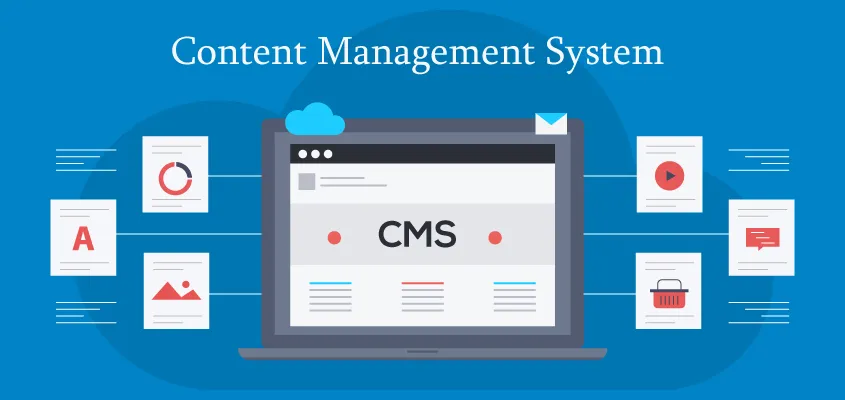
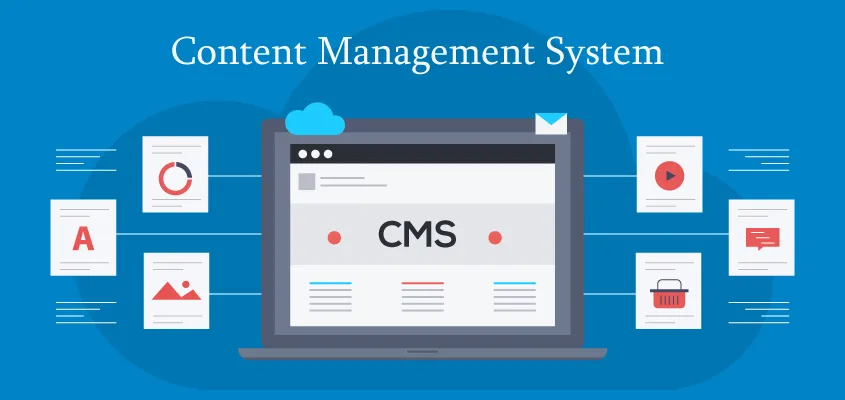
If your company’s website feels less like a cutting-edge flagship and more like a dusty old filing cabinet, you’re not alone. For years, the conversation around running a website centered on one thing: Content Management Systems (CMS). We focused on features like ‘easy uploads’ and ‘drag-and-drop editors.’ Sigh.
In today’s dizzying digital landscape, where the average user has the attention span of a caffeinated squirrel and AI is writing your competitor’s next blog post, your CMS is no longer just a backend tool. It’s the central nervous system of your entire digital presence.
It’s time to stop managing content and start mastering your digital experience (DX).
The Great Shift: From CMS to DX Platform
The old article you might have seen here a few years ago probably gave you a nice checklist: Is it affordable? Does it have plugins? Today, those questions are table stakes.
The current web demands a platform that can handle personalization, lightning-fast loading, secure data, and multi-channel delivery—all while being flexible enough to pivot when the next big tech trend hits.
What you really need is a Digital Experience Platform (DXP)—or at least a modern CMS that is powerful enough to act like one.
1. The Headless Revolution: Stop Chaining Your Content
The biggest shift? The move from Monolithic (traditional, all-in-one) CMS to Headless or Decoupled architectures.
- The Old Way (Monolithic): Your content, design, and delivery are all tied together. If you update the website, you usually have to use the same system to power your mobile app or in-store kiosk. It’s fast to launch, but slow to evolve.
- The Modern Way (Headless): Your content is stored as pure data via APIs (Application Programming Interfaces). The “head” (the frontend design/display) is separate. This means the same NiCREST-crafted content can be seamlessly delivered to your website, your social media stories, your IoT devices, and that shiny new augmented reality app you’re dreaming about.
The Witty Takeaway: Don’t let your website be the bottleneck. If your CMS can’t talk fluently to your marketing automation tools or your customer service platform, it’s not a central nervous system—it’s a glorified content storage locker.
AI, Personalization, and the Human Touch
You can’t talk about modern marketing without talking about AI Automation. And your choice of platform is where the rubber meets the road.
A truly modern CMS/DXP doesn’t just store content; it helps you use it smarter. Look for systems that can natively integrate with or offer:
- Personalization Engines: Imagine a small business owner landing on your site and seeing an immediate case study relevant to their industry, or a corporate client seeing a specific report on enterprise scaling. That’s the power of data-driven, automated personalization.
- AI-Powered SEO & Optimization: AI tools can instantly analyze content performance, suggest optimization tweaks, and even generate variations of copy for A/B testing far faster than any human editor (but don’t worry, we’re still better at the emotional engagement part!).
- Workflow Automation: Does your CMS let your marketing team publish a blog, push the snippet to social, and trigger an email campaign all from one action? Efficiency is the new competitive edge.
The Authority Insight: In a post-GDPR/CCPA world, data privacy is paramount. Your platform must be capable of managing user consent and data securely. Personalization without privacy is just creepy.
UX/UI: If It’s Not Effortless, It’s Worthless
As UX/UI specialists, we’ve seen this play out thousands of times: an entrepreneur invests heavily in marketing, drives traffic to the site, and then… nothing happens.
The problem is often not the traffic—it’s the friction on the site.
Your modern web platform must support a stunning, friction-free experience. When evaluating a system, ask yourself these NiCREST-approved UX questions:
- Speed & Performance: Does the CMS output clean code that ensures near-instantaneous load times (a major factor for both SEO and user retention)?
- Visual Builder Experience: Can your content creators easily craft beautiful, conversion-focused landing pages without needing a developer for every single change? (This is a huge factor in agility!)
- Mobile-First, Always: Is it truly responsive, or does it just ‘kind of’ shrink the desktop version? Google and your users demand a flawless, mobile-first experience.
The Entrepreneur’s Edge: A beautiful design is great, but a design that converts is the lifeblood of a small business. Your platform choice determines whether your visitors effortlessly glide toward the checkout button or get frustrated and bounce.
The NiCREST Checklist for a Future-Proof Web Foundation
Forget the old feature list. Here are the crucial, modern criteria we use when advising clients on a strategic digital foundation:
- Agility & Integrability: Can it easily integrate with your MarTech stack (CRM, analytics, email)? Is it API-first?
- Scalability: Can it handle a sudden 10x spike in traffic during your next viral campaign without collapsing?
- Performance & Security: Is it built for speed and regularly updated to meet modern security standards?
- Authoring Experience: Is the content creation interface intuitive, powerful, and designed for marketers, not just developers?
- Total Cost of Ownership (TCO): What are the hidden costs of maintenance, upgrades, and necessary third-party plugins?