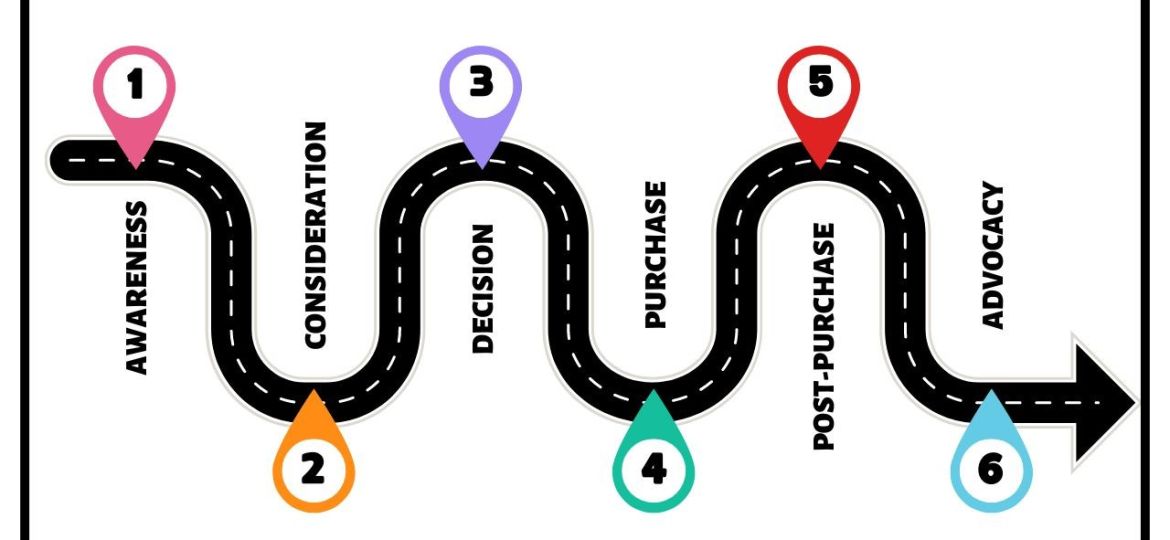
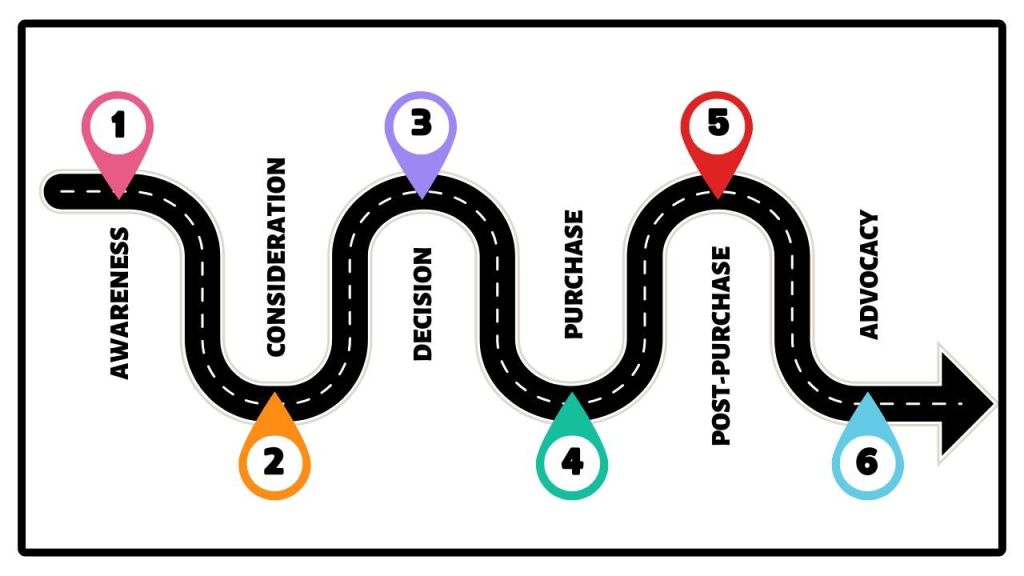
Let’s face it: If you think your customer journey is a neat, linear progression from “awareness” to “purchase,” you’re designing for a decade that’s already over. Today’s customer journey is a messy, multi-channel, non-linear experience, influenced by countless scrolls, clicks, and conversations. It’s less of a path and more of a swirling vortex of touchpoints.
The old “sales funnel” is dead. The modern marketer must embrace Customer Journey Mapping (CJM)—a strategic exercise that visualizes the customer’s experience from their perspective—to identify friction, understand intent, and apply hyper-personalized solutions.
In 2026, successful CJM is powered by AI automation and focused relentlessly on seamless UX/UI design and first-party data. At NiCREST, we use these maps to build digital identities that foster deep engagement and drive long-term loyalty.
Here is the ultimate guide to creating a truly effective, modern Customer Journey Map.
1. Phase 1: The AI-Driven Discovery (Mapping the Reality)
Before you draw a single box, you need objective, real-world data on what your customers are actually doing.
A. Data Integration and Synthesis
The biggest mistake is relying on assumptions. You need to pull and integrate data from across your entire tech stack:
- Behavioral Analytics: Use GA4 and heatmap tools (like Hotjar) to visualize user movement, scroll depth, and UX friction points on your website.
- CRM Data: Track the time and channels involved in conversion, service tickets, and post-purchase behavior.
- AI Sentiment Analysis: Mine customer reviews, social media mentions, and chat transcripts (as discussed in 7 Powerful Ways to Mine Customer Reviews insights) to identify the emotional highs and lows at each stage.
B. The Persona Deep Dive
Your map is useless without accurate personas. Use your data to build profiles that include not just demographics, but motivations, pain points, and specific digital behaviors (e.g., Learner, Entrepreneur, Corporate Rep). Each persona requires its own unique journey map.
2. Phase 2: Building the Map (The Visual Story)
The map itself is a communication tool designed to align teams (marketing, sales, development, service).
A. Key Elements of the Modern Map
Your map must capture the following elements across every stage (Awareness, Consideration, Purchase, Retention, Advocacy):
| Element | Focus | Modern Significance |
| Stages & Goals | What the customer is trying to achieve (e.g., research a problem). | Focus on micro-conversions that build trust (e.g., downloading a lead magnet). |
| Touchpoints | Every place the customer interacts with your brand (website, email, social ad, chatbot). | Must prioritize omnichannel continuity—seamless transitions between platforms. |
| Thoughts & Feelings | What the customer is thinking and feeling (pain, excitement, doubt). | Highlighted by sentiment analysis; the most critical area for emotional engagement. |
| Friction Points | Where the journey breaks down (a slow-loading form, confusing navigation). | Directly informs UX/UI development priorities and technical SEO fixes. |
B. The Emotional Curve
Overlaying an emotional curve on the map is critical. Identify the moments where customers feel confusion or frustration. These “lows” are your highest-priority opportunities for intervention—whether through a proactive service chat, a contextual help article, or an automated email.
3. Phase 3: The AI-Powered Action (Optimization and Automation)
A map is just a drawing until it triggers real, conversion-driving action. This is where AI automation transforms strategy into execution.
A. Proactive Personalization
Once the map identifies a specific friction point (e.g., high bounce rate on the pricing page), AI automation triggers a personalized response:
- A dynamic banner appears on the website offering a relevant comparison guide.
- The prospect’s CRM profile is flagged with a high intent score.
- An email sequence is launched, offering a free, low-friction consultation.
B. Conversion Rate Optimization (CRO) Prioritization
The map provides the definitive list of UX/UI issues to fix. Prioritize the friction points that affect the largest number of high-value personas in the crucial conversion stages. Focus on micro-conversions (e.g., form completion, video consumption) that reliably lead to the ultimate goal.
C. Continuous Measurement (The Flywheel Effect)
The journey is a flywheel, not a funnel. The map must include the Retention and Advocacy stages. We measure the CLV of customers who completed a smooth journey versus those who experienced friction. This data is fed back into the map (5 Loop Analytics), allowing for continuous, iterative refinement.
The modern Customer Journey Map is your single most important tool for aligning your marketing, sales, and service efforts. It shifts the focus from your internal process to the customer’s lived experience, which is the only place true loyalty and conversion are found.
[Call-to-Action]
Ready to stop guessing and start leveraging data to map a customer journey that guarantees engagement and drives loyalty? Contact NiCREST today for a complimentary consulting session and let us architect your AI-powered Customer Journey Map.