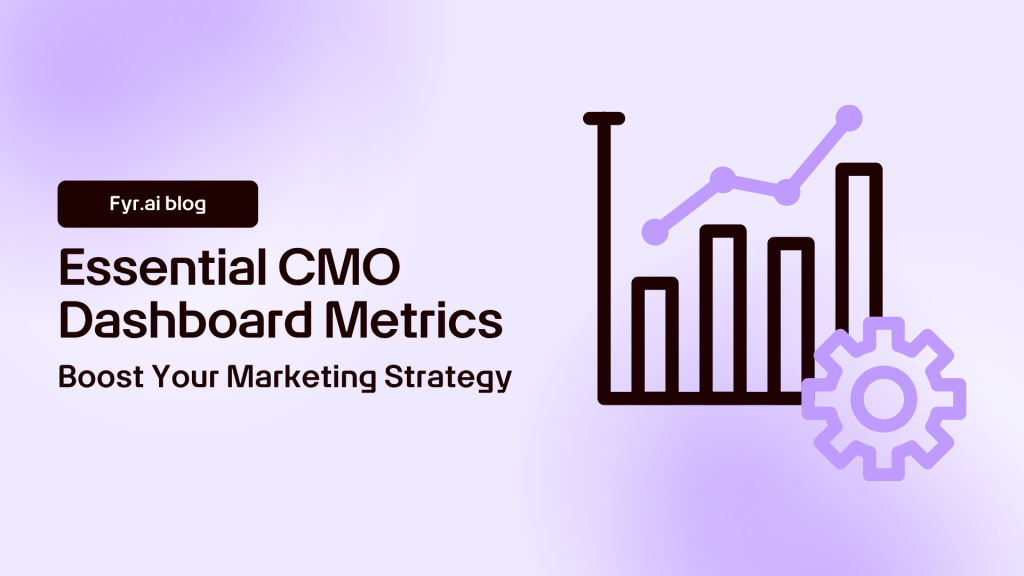
The era of the “Vanity Metric” is officially in the graveyard. If you’re still walking into boardrooms bragging about “likes,” “impressions,” or “follower growth,” you’re essentially telling your CEO that you’re playing with digital confetti while they’re trying to build a fortress.
In 2026, the role of the Chief Marketing Officer has shifted from “Head of Creative” to “Architect of Growth.” With AI automating the mundane and privacy laws tightening the screws on tracking, the metrics we track must be sharper, deeper, and more tied to the bottom line than ever before.
At NiCREST, we help leaders stop drowning in data and start swimming in insights. Here is the definitive guide to the metrics that will define success in 2026.
Phase 1: The Economics of Relationships
In a world without third-party cookies, the value of a customer isn’t just a transaction—it’s an asset.
- Customer Acquisition Cost (CAC) by Channel: Not just total CAC, but granular data. What does it cost to acquire a customer via AI-search vs. social commerce?
- LTV:CAC Ratio: The holy grail. If your Lifetime Value isn’t at least 3x your Acquisition Cost, your business model is a leaky bucket.
- Customer Equity: The total combined lifetime values of all your customers. This is the metric the Board actually cares about.
- Churn Rate (Predictive): Using AI to identify “at-risk” customers before they actually leave.
Phase 2: The Modern Conversion Funnel
The funnel isn’t linear anymore; it’s a “loop.” These metrics track how well your digital identity converts interest into income.
- Average Contract Value (ACV) / Average Order Value (AOV): Are you upselling effectively, or leaving money on the table?
- Conversion Rate by Device & Intent: A high conversion rate on desktop means nothing if 80% of your traffic is bouncing on mobile.
- Cart/Form Abandonment Sentiment: Why are they leaving? Is it a UX friction point or a price shock?
- Pipeline Velocity: How fast does a lead move from “Who are you?” to “Take my money”?
Phase 3: The “Brand Authority” Indicators
Since AI agents (like SearchGPT and Gemini) now recommend brands, you need to know if you’re the one they’re picking.
- Share of Search: How often is your brand searched for compared to your competitors? This is the new “Share of Market.”
- Brand Sentiment Analysis Score: Using AI to aggregate reviews, social mentions, and forum discussions into a single “Health Score.”
- Entity Authority Score: How well do search engines understand your brand as a topical expert?
- Zero-Click Content Reach: How often is your content providing the “Featured Snippet” or AI answer?
Phase 4: Efficiency & AI Automation
If you aren’t tracking the efficiency of your tech stack, you’re overpaying for digital clutter.
- Marketing Origin Revenue (MOR): The percentage of total revenue that started with a marketing touchpoint.
- Cost Per Incremental Lead: What does it cost to get the next lead, beyond your baseline?
- AI Contribution Margin: How much time/money are your AI automations saving you in content production and lead qualification?
- Return on Ad Spend (ROAS) – Profit Adjusted: Because high revenue with zero margin is just busy work.
Why Data Without Design is a Dead End
Numbers tell you what is happening, but they don’t always tell you why. At NiCREST, we specialize in bridging the gap between cold analytics and human-centric UX/UI design.
We’ve seen brilliant CMOs fail because their data was perfect but their digital identity felt like a relic from 2018. To win in 2026, you need a website that doesn’t just look good—it needs to be a conversion engine tuned to the specific metrics listed above.
Is your dashboard telling you a story of growth, or just a story of activity?
If you’re ready to stop guessing and start hitting the benchmarks that actually drive valuation, the NiCREST team is here to help. We don’t just provide “web services”; we provide the digital strategy and AI automation that turns small businesses into market leaders.
[Reach out to us at NiCREST today for a complimentary CMO Metric Audit. Let’s identify the gaps in your data and the opportunities in your design.]