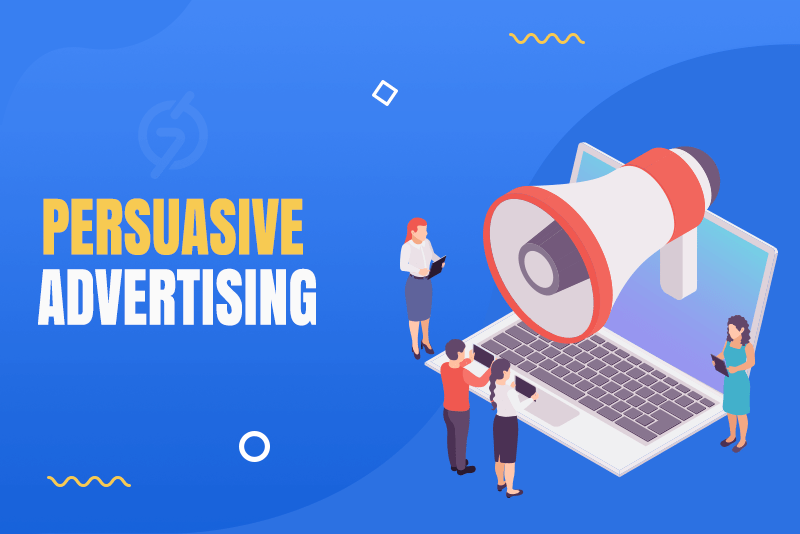
The old-school tactics of persuasive advertising—the dramatic claims, the shouting headlines, the relentless features lists—they don’t just feel dated; they actively repel today’s savvy consumer.
The modern market isn’t looking for a sales pitch; they’re looking for a solution, a story, and a relationship.
As experts in web marketing, content, and UX/UI, we at NiCREST know that true digital persuasion today is less about trickery and more about alignment—aligning your brand’s values and solutions with the customer’s needs and emotional state. It’s about building a digital experience where the customer persuades themselves.
Ready to stop feeling like a nuisance and start becoming an indispensable resource? Here’s our updated guide to the art of modern digital persuasion, incorporating the latest in psychology, privacy, and automation.
The New Persuasion Triangle: Emotion, Ethics, and Experience
1. Focus on the ‘Why’ (The Simon Sinek Effect, Amplified)
- The Old Way: “Buy our product! It has 10 features!”
- The Modern Persuasion: “We believe [Your Big Idea]. That’s why we created this. By using it, you join us in [Shared Value/Mission].”
- Actionable Insight: Persuasion begins with your brand story and purpose. Every piece of advertising—from a banner ad to a landing page headline—must clearly communicate the value or transformation your product offers, not just its specifications. Connect with the customer’s aspiration or pain point immediately.
2. Leverage the Power of Social Proof 2.0 (Authenticity over Volume)
- The Old Way: A list of famous client logos.
- The Modern Persuasion: Deep, specific, and relatable user testimonials and case studies.
- Actionable Insight: Go beyond star ratings. Use video testimonials, implement detailed review snippets directly into your site’s UX, and utilize user-generated content (UGC) in your ads. Crucially, focus on relatability—a testimonial from a business just like the prospect’s is infinitely more persuasive than one from an unrelated global enterprise.
3. The Scarcity & Urgency Tactic Reimagined (Ethical Triggers)
- The Old Way: Fake timers and deceptive “only 2 left!” messages.
- The Modern Persuasion: Transparent, genuine opportunities that tap into Fear of Missing Out (FOMO) through real value.
- Actionable Insight: Use scarcity for limited-time events (e.g., a webinar, a launch cohort) or genuine stock levels. The key is trust. If you establish ethical urgency (“Our complimentary consulting slots are booking fast for Q1”), the emotional trigger works because you haven’t eroded the reader’s trust.
UX/UI: The Persuasion Delivery System
Persuasion isn’t just in the copy; it’s in the seamlessness of the experience. A confusing process creates friction, which is the enemy of conversion.
4. Micro-Copy is Macro-Persuasion (The UX/UI Sweet Spot)
- The Old Way: Generic buttons like “Submit” or “Click Here.”
- The Modern Persuasion: Clear, benefit-driven text on every button, form field, and error message.
- Actionable Insight: Use persuasive micro-copy to lower anxiety. Instead of “Submit,” use “Get Your Free Web Audit” or “Start My 7-Day Trial.” This small shift reduces cognitive load and reinforces the next benefit.
5. The Reciprocity Principle: Give Before You Ask
- The Old Way: A giant pop-up demanding an email address right away.
- The Modern Persuasion: Offering immense, contextually relevant value before the ask.
- Actionable Insight: Your primary lead magnet should be a genuinely helpful, high-value asset (a proprietary tool, a comprehensive guide, a masterclass video). This establishes your authority (Ethos) and creates an obligation in the user’s mind to listen to your subsequent message (Reciprocity).
6. Clarity Over Cleverness (The Cognitive Ease Advantage)
- The Old Way: Overly complicated design, jargon-heavy language.
- The Modern Persuasion: Simple, intuitive design that makes the next step effortless.
- Actionable Insight: Every page must answer the question: “What am I supposed to do here?” Use clear visual hierarchy, ample white space, and a single, obvious Call-to-Action (CTA) per section. The less the user has to think, the more likely they are to convert.
The New Frontier: AI, Personalization, and Ethics
The digital landscape is defined by data, but modern persuasion requires respect for privacy.
7. Personalization That Isn’t Creepy (The Ethical Line)
- The Old Way: Retargeting a user with the exact product they just abandoned (feels watched).
- The Modern Persuasion: Dynamic content and offers based on inferred needs and stage of the buyer journey.
- Actionable Insight: Use AI/Machine Learning to segment users into need-based buckets (e.g., “Entrepreneur with old site,” “Corporate marketer focused on efficiency”). Your ads and website content should then dynamically shift the headline and primary offer to speak directly to that specific persona’s pain point. This is hyper-relevance, not surveillance.
8. AI-Driven Copy Optimization (Testing at Scale)
- The Old Way: Manually testing 3-5 headlines per campaign.
- The Modern Persuasion: Using AI to generate and test hundreds of copy variations in real-time.
- Actionable Insight: Deploy AI copywriting tools not to write for you, but to serve as a relentless A/B testing engine. Let the AI test emotional appeals (joy, curiosity, relief) and different framing techniques on a small subset of traffic, then use the human-vetted winners for your main campaigns.
9. Address Privacy and Security Concerns Head-On
- The Old Way: Hiding privacy policies in the footer.
- The Modern Persuasion: Recognizing that security is a selling point.
- Actionable Insight: If you require sensitive data, use trust signals prominently (e.g., “SSL Secure,” “We never share your data,” third-party security badges). In a privacy-aware world, transparency about data usage is the ultimate way to build rapport (and convert high-value clients).
The NiCREST Bottom Line: Authentic Authority Wins
Persuasion is no longer about tricks; it’s about trust delivered through excellence in content, design, and ethical strategy. Your website isn’t just a brochure; it’s your most powerful, always-on persuasive expert.
If your current digital presence is relying on outdated techniques, sounding desperate, or creating friction, it’s time for an upgrade.