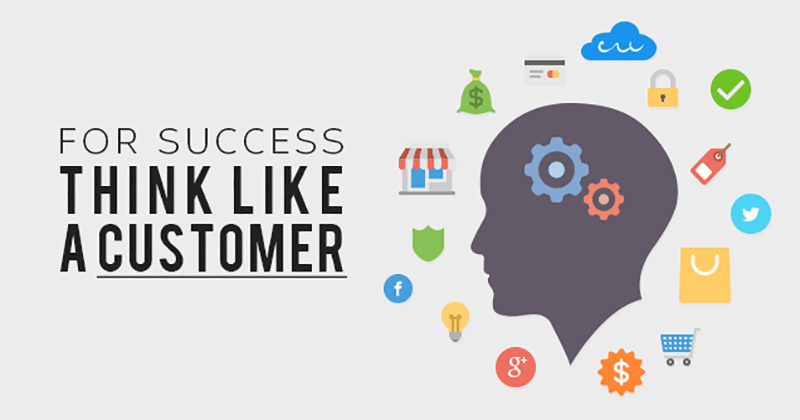
Let’s cut to the chase: You can have the slickest website design, the biggest ad budget, and the most compelling copy, but if you don’t genuinely understand why a person opens their wallet or fills out your form, you’re just playing digital darts blindfolded.
The essence of marketing remains pure psychology. But in today’s digital landscape, the tools we use to observe, predict, and influence that psychology have been revolutionized by AI automation and complicated by strict privacy mandates.
At NiCREST, we view your website not just as a brochure, but as a live experiment in human decision-making. We use data-driven insights to transform visitor behavior into predictable, high-value conversions.
Ready to stop chasing trends and start mastering the fundamental human drivers behind the purchase? Here is your updated guide on why mastering modern consumer behavior is the ultimate secret weapon for your business.
1. From Segmentation to Hyper-Personalization (The AI Edge)
The old way was to segment customers into broad buckets (demographics). The modern way is to predict the individual user’s next action based on a torrent of real-time behavioral data.
- The AI Prediction Engine: We no longer guess a user’s intent; AI predicts it. Tools analyze a user’s scroll depth, cursor movements, time spent on specific elements, and their past interaction history. This allows for micro-moments of personalization—showing them the exact product or headline they’re most likely to engage with right now.
- The Psychological Payoff: This caters to the human need for relevance and instant gratification, minimizing cognitive load and making the conversion path feel frictionless.
- The Privacy Paradox: With the death of third-party cookies, behavioral data must increasingly be gathered ethically via first-party tracking (data you own) and contextual targeting. This forces marketers to focus on what the user is doing on your site (high-quality data) rather than where they’ve been everywhere else (low-quality data). Ethical behavior tracking is now a competitive advantage.
2. UX/UI Design: The Architecture of Behavior
The moment a user lands on your page, your UX/UI design is actively influencing their emotional state, trust level, and likelihood of converting. Design is not decoration; it’s engineered psychology.
- Minimizing Cognitive Load: Humans are inherently lazy (in a psychological sense). We seek the path of least resistance. Your design must minimize the effort required to understand the offer and complete the action. Too many choices, too much text, or a confusing navigation? Behavioral Outcome: High bounce rate.
- The Power of Social Proof & Urgency: These psychological triggers are evergreen, but their digital delivery must be authentic:
- Social Proof: Real-time counters showing recent purchases, authentic testimonials, and verified review scores (e.g., using Schema Markup to display stars on search results).
- Urgency: Ethical scarcity (e.g., “Only 3 spots left this month” for a service) or time-bound offers (a flash sale). If it doesn’t feel real, it breaks trust.
- Friction and Funnels (The $F_C$ Equation): Every extra field, every slow-loading element (hello, Core Web Vitals!), and every confusing piece of jargon adds friction to your conversion funnel. We often use mathematical models to calculate conversion friction, or $F_C$, where $F_C \uparrow \implies \text{Conversion Rate} \downarrow$. Our job is to ruthlessly eliminate that friction.
3. The Shift to Authentic Communication
Customers are fatigued by hyperbole and polished corporate speak. They seek authenticity and relational value.
- The Value-First Approach: Modern consumer behavior dictates that users will often interact with your content (a helpful blog post, a useful tool) long before they interact with your sales page. Your content must establish your expertise and goodwill first, building the trust required for the eventual transaction.
- Transparent Communication: In an era of deepfakes and AI-generated text, transparency builds powerful trust. Clear privacy policies, easy-to-find contact information, and authentic, human voices in your content are paramount. Trust is the most valuable currency in digital commerce.
- Post-Purchase Experience: Consumer behavior doesn’t end at the sale! The quality of your confirmation email, your return policy, and your follow-up communication determines the most valuable behavior of all: Repeat Purchase and Loyalty. Your digital strategy must account for the entire customer journey, not just the initial click.
Ready to Turn Clicks into Predictable Cash Flow?
Consumer behavior is the bridge between human psychology and digital strategy. By focusing on ethical data collection, persuasive UX/UI design, and AI-driven personalization, you stop simply reacting to market trends and start shaping them.
If your marketing efforts feel disjointed or your website is failing to capture the human intent behind the visits, the NiCREST team is ready to help. We blend deep psychological expertise with modern web technology to build conversion machines that work.
Let’s engineer a website that understands and influences your customers.
COMPLIMENTARY CONSULTING OFFER:
Reach out to me and the team at NiCREST today for a complimentary Behavioral Website Audit. We’ll analyze your current user journeys, identify friction points, and provide a clear, actionable plan to align your digital experience with your customer’s intrinsic buying behavior.