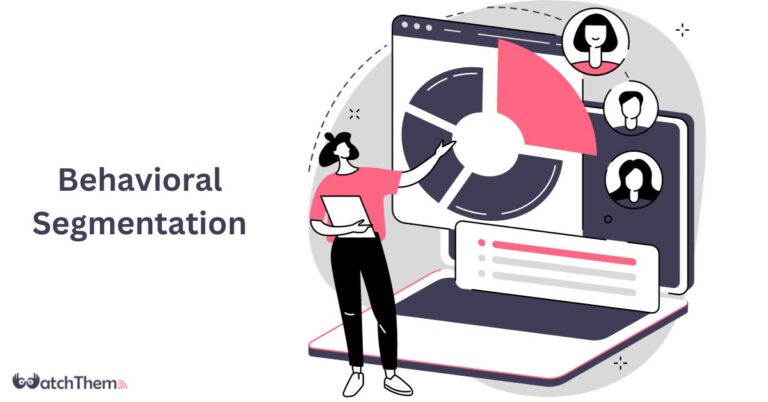
Let’s face it: knowing who your customer is (demographics) is table stakes. Knowing what they are doing, why they are doing it, and when they are most likely to convert is the secret sauce to modern marketing ROI.
Welcome to the world of Behavioral Segmentation.
In 2026, with sophisticated AI models and hyper-personalization driving user expectations, relying on age and location alone is a one-way ticket to being ignored. Behavioral segmentation is the strategy that breaks your audience into groups based on the actual actions they take—or don’t take—on your website, app, and through your marketing touchpoints
This isn’t just about better targeting; it’s about providing a seamless, hyper-relevant User Experience (UX) that feels like your brand is reading their mind. Here are the four main types of behavioral segmentation you must master to thrive in the age of AI.
1. Purchase Behavior (The Money Talk)
This segment focuses on the customer’s interaction with the conversion funnel and transaction history. This is the highest-value segmentation for driving revenue.
- The Old Way: “Target everyone who bought last year.”
- The Modern Way: Use AI to identify specific behavioral patterns that predict future sales and loyalty.
- Segment Examples:
- High-Value, High-Frequency Buyers (The Loyalists): Reward them with exclusive previews and VIP pricing.
- Cart Abandoners: Identify why they left (e.g., used discount code, viewed shipping policy page) and trigger a personalized, low-friction incentive (e.g., a simple email with a $5 discount, not a complex exit-intent pop-up).
- First-Time Buyers: Focus on post-purchase onboarding content and product education to drive retention.
- Segment Examples:
- NiCREST Insight: If your UX/UI design creates friction (slow checkout, confusing navigation), your behavioral data will be flawed. Fixing the conversion path is the prerequisite for effective purchase segmentation.
2. Benefits Sought (The Why Behind the Click)
This is arguably the most powerful segment because it zeroes in on the core need or problem the user is trying to solve with your product or service.
- The Old Way: Targeting by product category.
- The Modern Way: Targeting based on the psychological motivation drawn from search queries, content consumption, and landing page dwell time.
- Segment Examples:
- Speed Seekers: Users who click on ads/content promising “fast results” or “quick setup.” Target them with product pages that highlight speed metrics and streamlined onboarding.
- Price Shoppers: Users who spend time on comparison pages or actively search for coupons. Target them with transparent pricing and value-driven messaging.
- Quality Enthusiasts: Users who read detailed specs, warranty information, and expert reviews. Target them with content that showcases your E-E-A-T (Experience, Expertise, Authoritativeness, Trustworthiness).
- Segment Examples:
- Content Strategy Key: Your content creation must address these core benefits explicitly. If you sell a web solution, are you marketing the features (a new dashboard) or the benefit (30% less time spent managing your site)?
3. User Status & Journey Stage (The Maturity Meter)
This segment tracks where the customer sits in relation to your brand—from stranger to advocate—and focuses on moving them logically through the marketing funnel.
- The Old Way: Blast the same generic email to everyone.
- The Modern Way: AI-Powered Nurturing. Use AI to analyze site activity and predict the next logical step.
- Segment Examples:
- Prospects (Awareness): Target them with Demand Gen ads and educational content (blog posts, infographics) that solve a general problem, positioning your brand as the expert.
- Leads (Consideration): Target them with retargeting ads featuring case studies, testimonials, and product comparisons (using Deferred Deep Linking if they have the app).
- Disengaged/Churn Risks: Segment users who haven’t logged in for 30+ days and trigger high-value reactivation offers or personalized check-in messages.
- Segment Examples:
- Strategy Tip: This segment is vital for AI Automation. By clearly defining the stages, you empower your automated email sequences and ad platforms to deliver the right message at the right moment, maximizing conversion potential.
4. Occasion/Timing (The Contextual Cue)
This segment captures the contextual triggers—both universal (holidays, seasons) and personal (anniversaries, recent life events)—that drive purchasing behavior.
- The Old Way: Running a blanket Black Friday sale.
- The Modern Way: Personalized, Event-Driven Campaigns.
- Segment Examples:
- Universal Occasions: Marketing specific products based on calendar events (e.g., tax software in January, beach gear in May).
- Personal Occasions: Targeting customers whose purchase history suggests a recurring need (e.g., sending a reminder for re-ordering consumables 30 days before their typical refill cycle).
- Urgency/Impulse: Users viewing limited-time offers or receiving an abandoned cart notification within a tight timeframe.
- Segment Examples:
- The UX Tie-In: Urgent, limited-time campaigns require impeccable UX design—fast loading, clear countdown timers, and effortless checkout—to capitalize on the time-sensitive behavior.
Behavioral Segmentation is Your Competitive Edge
In the era of AI and vast data, behavioral segmentation is your only path to true personalization and measurable marketing ROI. It ensures that every ad dollar, every piece of content, and every element of your website is dedicated to serving a specific, high-value user need.
Stop generalizing and start specializing in the actions your customers take.
The team at NiCREST specializes in helping businesses establish the necessary conversion tracking and analytics frameworks to segment their audience behaviorally. We then use those insights to overhaul your UX/UI design and create high-converting content strategies that speak directly to the customer’s intent.