

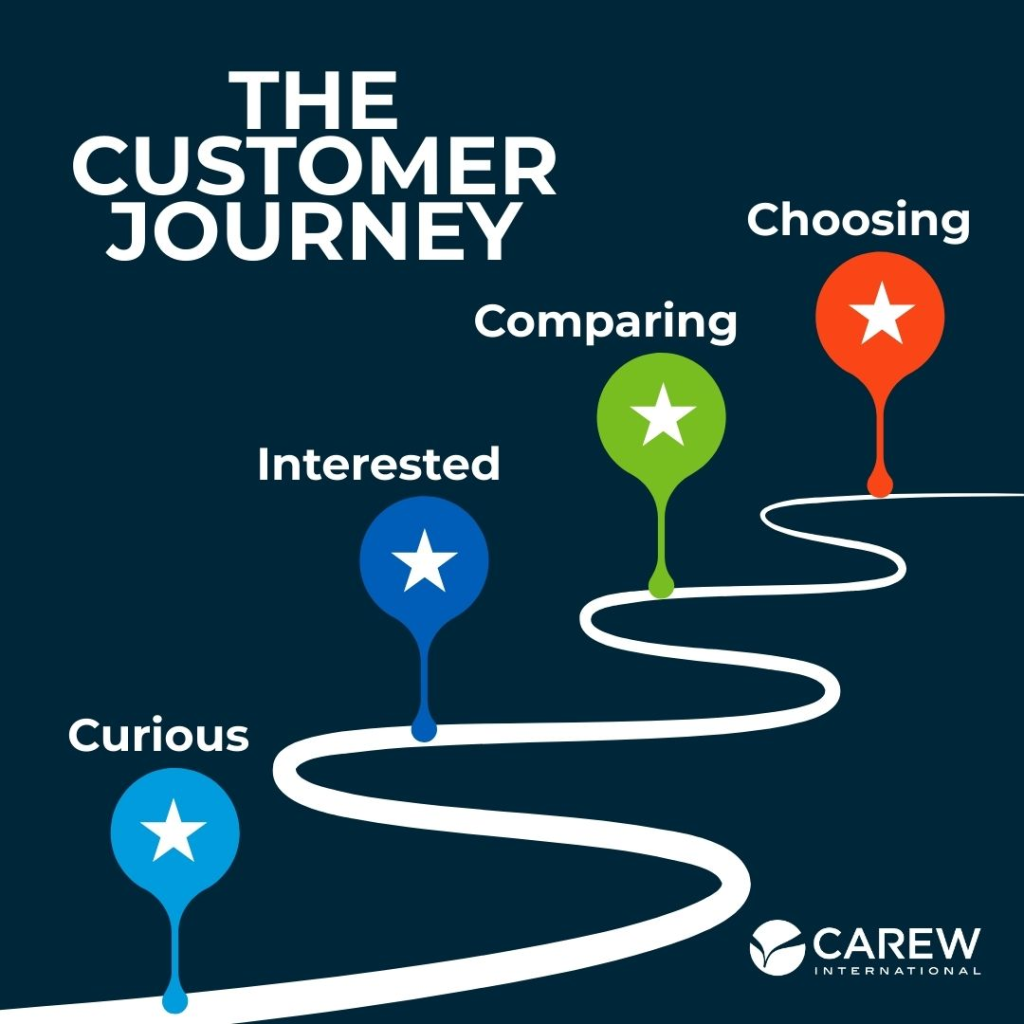
Let’s toss out the old notion of the sales funnel. It was a rigid, linear pipeline that focused entirely on what the business did. Today’s reality is a dynamic, swirling ecosystem—the Sales Journey—that places the empowered customer firmly in the driver’s seat.
In 2026, the sales process is not about pushing your product; it’s about providing continuous, personalized value, leveraging AI automation to predict needs, and ensuring a seamless experience across every digital touchpoint. The buyer now controls the information, the timeline, and the conversation.
At NiCREST, we specialize in building digital identities and strategies that meet the modern customer precisely where they are. We help businesses transition from outdated “closing” tactics to a customer-centric growth model. Here is the new map for navigating the modern sales journey to achieve sustainable success.
1. From Funnel to Flywheel: Understanding the Shift
The traditional funnel ended at the purchase. The modern Sales Journey recognizes that the best customers are the ones you already have. The goal is no longer a single transaction, but maximizing Customer Lifetime Value (CLV).
- Attract (Marketing): Fueled by high-quality, SEO-optimized content and personalized ads (often created or optimized using AI). This stage is about earning trust and solving micro-problems before the customer is ready to buy.
- Engage (Sales & Service): Where the human element, guided by CRM data and AI-driven insights, takes over to have relevant conversations. The interaction must be consultative, not prescriptive.
- Delight (Service & Success): This stage closes the loop, focusing on support, proactive check-ins, and turning satisfied customers into advocates—who then attract new customers back into the flywheel.
The sales team’s job is no longer just selling; it’s removing friction at every point in the customer’s journey.
2. The Digital Co-Pilot: AI Automation in the Sales Journey
The volume of data and the need for speed make human-only sales cycles obsolete. AI doesn’t replace the salesperson; it equips them with predictive superpowers.
- Intent Signal Identification: AI analyzes website behavior, content consumption, and search queries to detect high-intent signals. This tells the sales team exactly when a lead is ready for human contact, avoiding premature or delayed outreach.
- Predictive Lead Scoring: Your CRM, powered by AI, scores leads based on their likelihood to convert and their projected value. This automatically prioritizes the hottest, most profitable leads, ensuring the sales team’s limited time is spent efficiently.
- Intelligent Content Delivery: AI suggests the best piece of content, case study, or pricing sheet to send to a prospect at their current stage. This ensures the message is hyper-personalized, timely, and relevant, bridging the gap between sales and marketing content.
The Witty Truth: A great salesperson closes the deal. An AI-enhanced salesperson closes the right deal, faster, and knows exactly why they closed it.
3. The Trust Imperative: Seamless UX/UI and Data Privacy
The modern customer demands transparency and ease of use. A broken digital experience immediately undermines trust and derails the sales journey.
- Frictionless UX: From the initial landing page to the final e-signature, the process must be seamless. Clunky forms, slow load times, or a confusing mobile experience are deal-breakers. The sales journey must be designed with conversion-focused UX/UI principles that minimize effort for the buyer.
- Omnichannel Continuity: When a lead moves from a live chat (Service) to a discovery call (Sales), the interaction must be continuous. The CRM data must be instantly accessible to the representative, ensuring the customer never has to repeat themselves. This omnichannel coherence builds massive confidence.
- Consent and Privacy: Sales conversations often touch on sensitive data. The modern sales desk must demonstrate strict adherence to privacy laws (GDPR, CCPA). Using a centralized CRM for consent management is not just compliance; it’s a key factor in establishing professional credibility.
4. Continuous Optimization: The Feedback Loop
The Sales Journey is not a set path; it’s a constant process of refinement. Success is achieved through a perpetual feedback loop similar to the principles of 5 Loop Analytics.
- Review and Iterate: Sales outcomes (wins and losses) are fed back into the CRM. AI analyzes the data to refine the predictive models and assess the effectiveness of the content and the sales process itself.
- Measure CLV, Not Just Revenue: Success is defined by long-term customer value, not just the initial revenue figure. This shifts the focus from aggressive, transactional sales to consultative, relationship-focused engagement that pays dividends over time.
By embracing AI, prioritizing the customer experience, and treating sales as a journey of continuous value, businesses can turn their digital presence into a highly predictable, high-converting revenue engine.
Is your sales process stuck in the old funnel, leading to wasted leads and inconsistent revenue? Let the NiCREST team map your customer’s sales journey and integrate the necessary AI automation and UX/UI upgrades. Contact us today for a complimentary consulting session and let’s optimize your path to customer-centric success.
