

Remember the digital Wild West? A time before GDPR and the iOS 14.5 shakeup? Back then, we all dreamed of a seamless user journey from a simple web ad straight into the heart of a mobile app. You know—click an ad for that perfect pair of sneakers, and bam! you land directly on the product page inside the app, even if you hadn’t downloaded it yet.
That dream is still alive, but it’s gotten a lot smarter and a whole lot more challenging.
In today’s landscape, where user privacy is the ultimate design constraint and the path from “ad click” to “in-app conversion” is riddled with friction, Deferred Deep Linking (DDL) isn’t just a nice-to-have feature; it’s the secret weapon for savvy digital marketers and product owners aiming for hyper-personalized experiences and iron-clad conversion attribution.
Deep Linking 101: The Original UX Upgrade
Before we get deferred, let’s quickly talk about Deep Linking itself.
In essence, a deep link is a smart URL that directs a user to a specific location within a mobile app, not just the app’s homepage. Think of it like giving someone a street address instead of just the city name.
The Problem: Standard Deep Links are only effective if the user already has your app installed. If they click the link and don’t have your app, they hit a frustrating dead end (often an error page), and the seamless journey you promised evaporates. Conversion lost. User annoyed.
The Deferral Revolution: How DDL Solves the Friction Problem
This is where Deferred Deep Linking (DDL) steps in to smooth out the bumps.
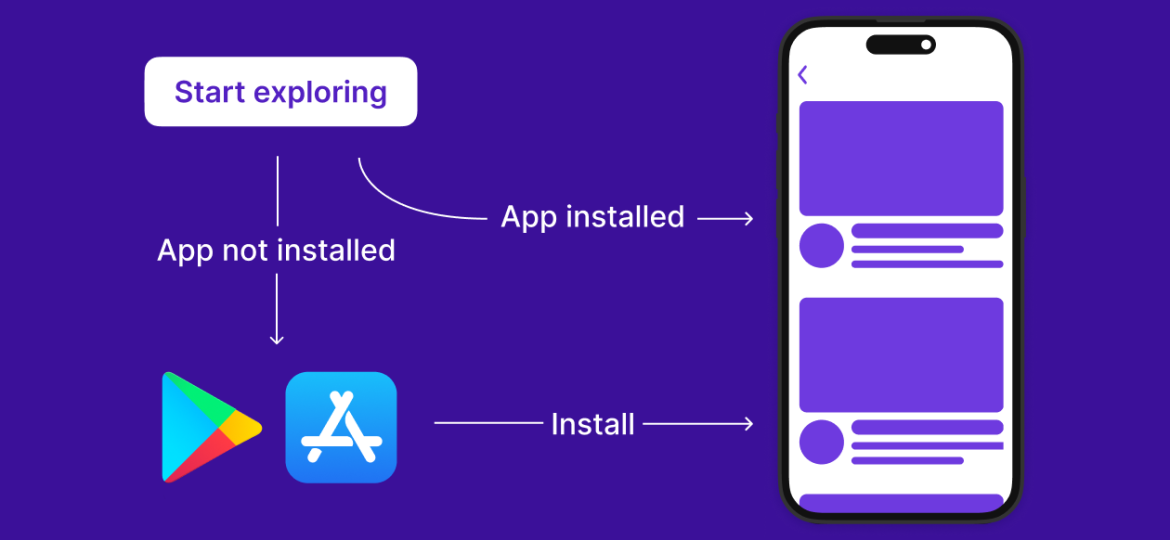
DDL is the clever technical workaround for new users. It ensures that a user who clicks your ad (on a mobile browser, email, or social media) but doesn’t yet have the app still ends up exactly where they intended—after they complete the download process.
It’s like being a digital concierge:
- The Click: A user clicks your NiCREST ad for a “complimentary consultation.”
- The Interception: Your DDL mechanism recognizes the click and the user’s device information (without violating privacy, more on that below!). It stores the intended destination: the “consultation booking page.”
- The Detour: The user is seamlessly routed to the relevant App Store (Apple) or Play Store (Google) to download your app.
- The Seamless Landing: Once the download is complete and the user opens the app for the first time, the DDL mechanism retrieves the stored destination (the “consultation booking page”) and drops the user onto that exact screen.
The Result? A zero-friction first-time user experience. No more fumbling on the homepage, no memory test required—just instant, personalized value delivery. This drastically improves onboarding completion rates and first-session conversions.
DDL in the Age of AI, Privacy, and Attribution
DDL is more critical today than it was even two years ago, primarily due to three major shifts in the digital landscape:
1. The Death of Third-Party Cookies & Mobile Privacy
With Apple’s App Tracking Transparency (ATT) framework, tracking users across apps and websites has become nearly impossible without explicit user consent. Third-party cookies are crumbling. DDL, when implemented correctly through privacy-centric techniques like probabilistic modeling or leveraging first-party data (where possible), offers a legitimate and effective way to connect the click to the install without relying on invasive persistent identifiers. It helps you attribute marketing spend to app installs accurately.
2. AI Automation and Hyper-Personalization
The goal of modern marketing is hyper-personalization—delivering the right content to the right user at the right moment. DDL is the foundation for this on mobile.
- An AI-optimized ad for “Web Design for E-commerce” shouldn’t just send a user to the app homepage; it should send them directly to the E-commerce Solutions section within the app.
- DDL ensures the continuity of the personalized intent established by your AI-driven ad campaign, leading to better ROI and less wasted budget.
3. The Expectation of Instant Gratification
Users have a lower tolerance for poor UX than ever before. If a user clicks an ad for a specific product and ends up on a generic page, you’ve broken the trust—and you’ve probably lost them. DDL is the answer to this demand for immediate, relevant results, directly contributing to a higher Customer Lifetime Value (CLV).
Your Next Move: DDL isn’t Just Technical, It’s Strategic
DDL moves your marketing team beyond vanity metrics (like impressions) and into the real world of conversions and revenue. It’s the bridge that turns an interested prospect into a loyal app user.
So, is your small business website or corporate digital platform still relying on outdated redirects and hoping for the best? Are you leaving money on the table by frustrating new app users with a generic first launch?
The team at NiCREST specializes in auditing, designing, and implementing these modern, high-conversion web and mobile strategies, including the proper, privacy-compliant implementation of Deferred Deep Linking and AI automation.
