Let’s talk about the gap between knowing your website should perform better and making it perform better. That chasm of inconsistency, inefficiency, and uncertainty is where revenue leaks out. For a long time, methodologies like Six Sigma felt like they belonged exclusively to factory floors and manufacturing processes.
But guess what? The core philosophy of Six Sigma—a data-driven approach focused on eliminating defects and reducing variability to near-perfect quality—is arguably more critical in the volatile, performance-obsessed digital landscape of 2026.
In web marketing, a “defect” isn’t a faulty car part; it’s a slow-loading page, a confusing checkout flow, an unreliable CRM integration, or a content piece that consistently fails to convert. The Six Sigma goal of achieving 3.4 defects per million opportunities translates directly to a mindset of ruthless conversion rate optimization (CRO) and flawless UX/UI design.
At NiCREST, we don’t just design and market; we apply this systematic, process-driven rigor to build digital identities that convert with near-perfect reliability.
1. Define, Measure, Analyze: The DMAIC Approach to Digital
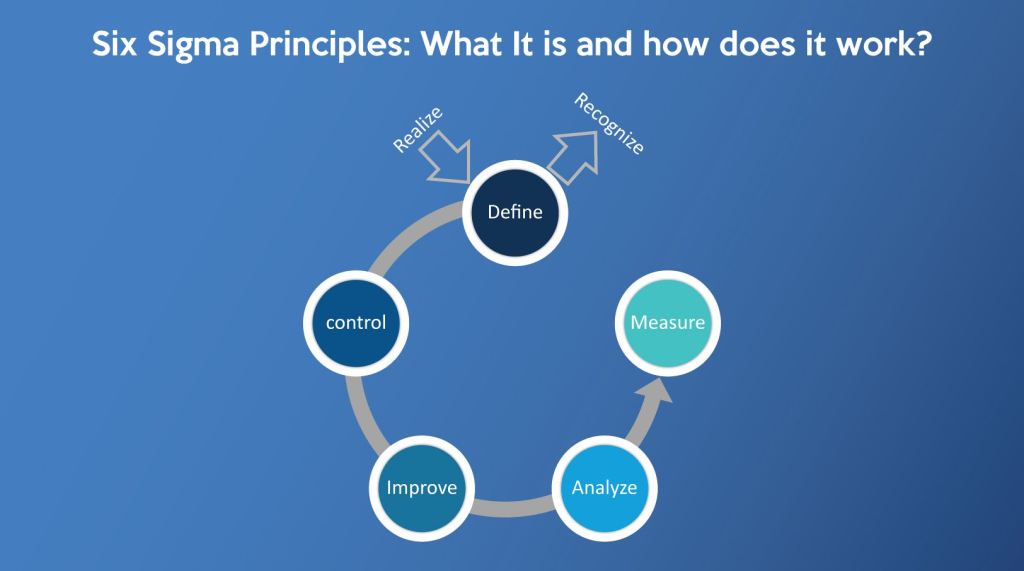
Six Sigma’s core five-phase methodology (DMAIC) is the perfect framework for modern web strategy.
A. Define: What is the Digital “Defect”?
- The Goal: Clearly define the business problem that needs solving. Is it a low Customer Lifetime Value (CLV), a high form abandonment rate, or a slow Core Web Vitals score?
- The Voice of the Customer (VoC): The “defect” must be defined from the customer’s perspective (e.g., “The checkout process is too long”).
B. Measure: Establishing the Baseline
- Data Integrity: Use comprehensive analytics (GA4, heatmaps, CRM data) to establish the current performance baseline. You can’t improve what you don’t accurately measure. This requires focusing on the quality of your measurement data itself—ensuring Accuracy, Completeness, and Consistency.
- Process Mapping: Visually map the entire digital process (e.g., the lead nurture sequence or the product discovery journey) to see all the steps and handoffs.
C. Analyze: Root Cause, Not Symptoms
- Statistical Tools: Use multivariate testing and cohort analysis to statistically determine the root cause of the defined defect. Is the high bounce rate caused by image loading speed (technical defect) or confusing headline copy (content defect)?
- AI Augmentation: Leverage AI automation tools to rapidly analyze large sets of user session data and identify patterns of frustration or confusion that human analysts might miss.
2. Improve and Control: Building Flawless Digital Processes
This is where the principles translate into conversion-boosting action and process reliability.
A. Improve: Optimizing the Digital Process
- Eliminate Waste (Muda): Identify and remove elements that don’t add value to the user experience (e.g., unnecessary form fields, redundant steps in navigation, slow-loading third-party scripts). This directly improves UX/UI design.
- Standardize High-Converting Processes: Once an A/B test proves a superior performance method (e.g., a specific CTA placement, a dynamic pricing display), that process becomes the new standard and is documented for future implementation.
B. Control: Sustaining the Gains
- Real-Time Monitoring: Implement dashboards and AI-powered alerts that continuously monitor key performance indicators (KPIs) against the new standard. If the page speed drops below the Six Sigma tolerance level (a performance defect), an alert is triggered instantly.
- Documentation and Training: Ensure every team member—from content creators to developers—understands the new, improved process. The reliability of the digital system should not depend on a single expert, but on the disciplined process itself.
3. The Benefits: From Reliability to Revenue
Applying Six Sigma rigor to your digital presence isn’t just about technical compliance; it’s about achieving measurable business benefits.
- Elevated Customer Trust: Reliability is the ultimate trust signal. When your site is fast, your forms work, and your customer service integration is seamless, you build the E-E-A-T required to convert.
- Maximized ROI on Content: Reducing variability in conversion processes means that every piece of high-impact content you create is much more likely to deliver a qualified lead, maximizing the ROI of your content strategy.
- Reduced Cost of Failure: By preventing defects (site downtime, buggy integrations, lost leads), you drastically reduce the high cost associated with firefighting, recovery, and compensating for poor customer experiences.
Ready to Build a Digital Presence with Near-Perfect Reliability?
Applying the discipline of Six Sigma to your web marketing and UX/UI design shifts your focus from hoping for results to guaranteeing them. It’s time to build a digital asset that consistently performs at a world-class standard.
[Call-to-Action]
Are inefficiencies and defects leaking revenue from your digital channels? Let the NiCREST team, experts in web strategy and process optimization, apply the rigor of Six Sigma to audit and improve your digital conversion architecture. Contact us today for a complimentary consulting session and move toward near-perfect digital quality.