In 2026, patience isn’t just a virtue—it’s a dying breed. If your website takes more than a few seconds to load, you aren’t just “slow”; to your customers, you’re essentially closed for business.
At NiCREST, we’ve audited hundreds of digital storefronts. The most heartbreaking trend? Brilliant small businesses losing 20–30% of their revenue before a customer even sees their logo, all because of a bloated “plug-and-play” theme or unoptimized images.
Here are the 14 site speed statistics that are currently defining (or crippling) your conversions this year.
The “Ouch” Factor: General Speed Realities
- The 2-Second Rule: 47% of users expect your site to load in 2 seconds or less. If you hit the 3-second mark, 40% of your traffic will simply vanish.
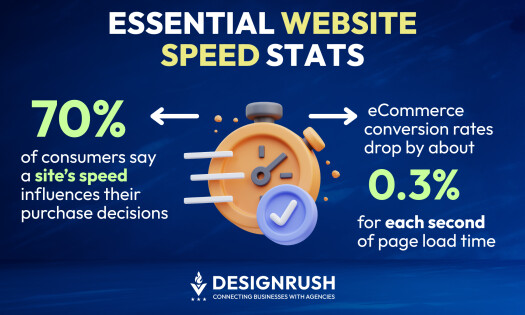
- The 1-Second Penalty: A mere 1-second delay results in a 7% drop in conversions. For a business making $10,000 a day, that’s a $250,000 loss every year.
- Satisfaction Slump: Customer satisfaction takes a 16% nosedive with just a one-second delay. Speed isn’t just technical; it’s emotional.
- The Abandonment Cliff: If your page takes 10 seconds to load, your bounce rate increases by 123% compared to a 1-second load.
The Mobile Experience (Where the War is Won)
- The Mobile Gap: While the average desktop load time is roughly 2.5 seconds, mobile sites are still lagging at an average of 8.6 seconds.
- Conversion Multiplier: A mobile site that loads in 1 second converts 3x higher than one that loads in 5 seconds.
- Traffic Dominance: With nearly 68% of global traffic now coming from mobile, a slow mobile site is no longer a “minor issue”—it’s a business-ending one.
- First Impressions: 73% of mobile users have encountered a site that was too slow to load. Most of them will never return to that brand.
SEO & The Google Factor
- Core Web Vitals (CWV): Google now uses INP (Interaction to Next Paint) as a primary ranking factor. It measures how fast your site reacts when a user clicks a button.
- The Ranking Tiebreaker: In 2026, if two sites have equal content quality, the faster site will almost always outrank the slower one by 3–5 positions.
- Crawl Efficiency: Search bots have a “crawl budget.” The faster your site, the more pages Google can index, leading to higher visibility for your entire catalog.
E-commerce & The Bottom Line
- The “Amazon” Effect: Even back in the day, Amazon proved a 100ms delay cost them 1% in sales. Today, that sensitivity is even higher for independent retailers.
- Loyalty Killer: 79% of shoppers who are dissatisfied with website performance say they are less likely to buy from that same site again.
- The Ad Spend Waste: If you are running PPC or Meta ads to a slow landing page, you are effectively paying a 20% “slow site tax” in the form of wasted clicks that bounce immediately.
Is Your Site Leaving Money on the Table?
Speed optimization isn’t about being “fancy”; it’s about respect. Respecting your customer’s time is the fastest way to earn their trust—and their wallet.
Most “slow” sites are suffering from easy-to-fix issues: oversized images, “heavy” fonts, or outdated hosting. At NiCREST, we specialize in trimming the digital fat to help your business run at the speed of 2026.